
What is early intervention in autism?
Early intervention is specialized support given to children with autism as early as possible, usually between birth and age six. It may include therapies like Applied Behavior Analysis (ABA), speech therapy, occupational therapy, and social-emotional learning. These services take advantage of a child’s critical developmental window to build lasting skills.
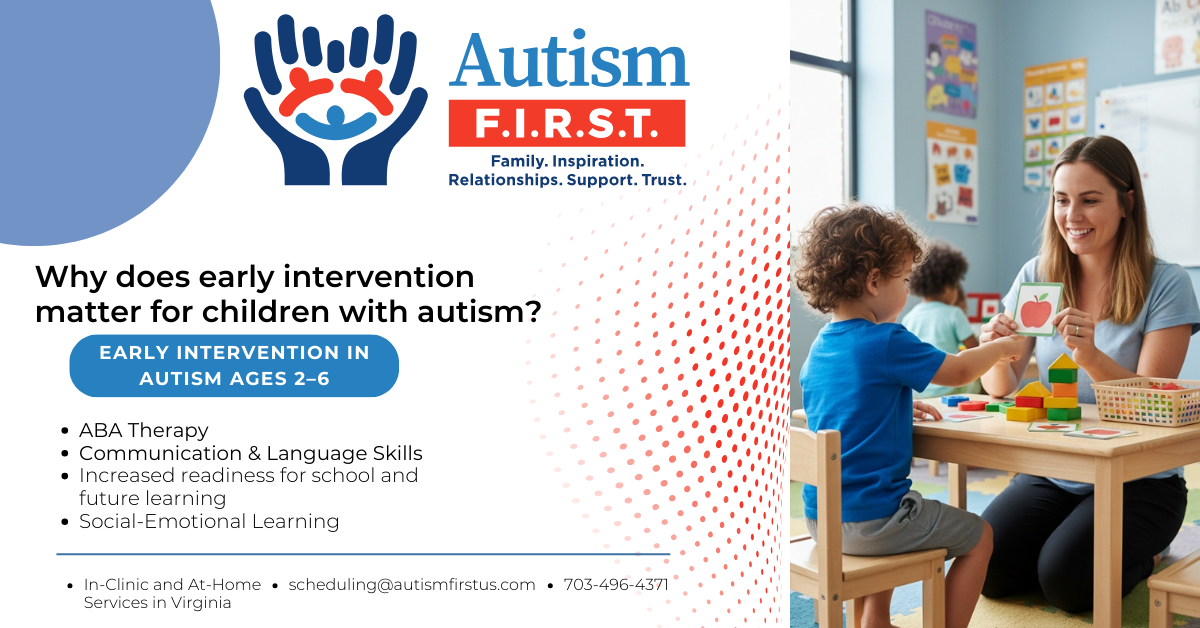
Why does early intervention matter?
Early intervention can significantly improve a child’s developmental outcomes. Research shows that children who start services early are more likely to experience:
- Better communication and language skills.
- Stronger social skills and emotional regulation.
- Greater independence in daily living activities.
- Increased readiness for school and future learning.
How does early intervention help families?
Early intervention benefits the whole family, not just the child. Parents and caregivers gain:
- Practical tools for supporting their child at home.
- Confidence in handling everyday challenges.
- Strategies for creating consistent routines.
- Support from professionals who understand autism.
What does Autism F.I.R.S.T. offer for early intervention?
At Autism F.I.R.S.T., we provide the F.I.R.S.T. Steps Ahead Day Program for children ages 2-6. This program uses structured activities, play-based learning, and individualized therapy plans to help children build the foundations they need for a brighter future.
Learn more about our Early Intervention Program →
People Also Ask – FAQs
-
At what age should early intervention start for autism?
Early intervention ideally begins as soon as developmental concerns are noticed, often during infancy or early toddlerhood. Research shows that services that started before age 3-6 lead to better communication, social, and developmental outcomes. In fact, a 2025 review by Simacek and colleagues found that behavioral interventions introduced in infancy and early toddlerhood significantly improve developmental trajectories. (Simacek et al., 2025→)
-
What services are included in early intervention for autism?
Common services include Applied Behavior Analysis (ABA), speech therapy, occupational therapy, and play-based social learning.
-
Does early intervention work for every child with autism?
Every child is unique, but research shows that most children benefit in areas like communication, social skills, independence, and school readiness.
-
How can parents support early intervention at home?
Parents can reinforce therapy by practicing daily routines, using visual supports, encouraging play, and working closely with their child’s care team.
-
Where can families find early intervention programs in Virginia?
Autism F.I.R.S.T offers the F.I.R.S.T. Steps Ahead Day Program (ages 2-6) in Chantilly and Herndon. Our sister-company Family Insight provides the Early Steps Program across their Virginia locations.
Check out the Virginia locations for Autism F.I.R.S.T. and Family Insight here →
What Parents Should Know
Early intervention helps children with autism build communication, independence, and social-emotional skills. Families who start services early give their child the strongest possible foundation for the future.